
About this Organization
Welcome to the enchanting world of hand-carved miniature zoo displays at a hidden gem located in Snow Hill, Maryland. Snow Hill Zoo Garden and Gallery is a place where creativity meets craftsmanship, bringing to life intricate and mesmerizing creations that are sure to captivate visitors of all ages. Nestled at 111 Willow St., Snow Hill Zoo Garden and Gallery is not your typical zoo experience. Instead of living, breathing animals, visitors are treated to hand-crafted miniature displays that are brought to life with motion, lights, and sounds. Each piece is a labor of love, meticulously crafted with attention to detail that showcases the talent and dedication of the artists behind them. As you step into the gallery, you are greeted by a menagerie of animals, many of which are hand-carved, or are re-purposed, re-painted with care. From majestic lions to playful monkeys, every creature is a work of art in its own right, beautifully capturing the essence and spirit of the animal kingdom. What sets Snow Hill Zoo Garden and Gallery apart is not just the stunning craftsmanship of the pieces, but also the creative process behind them. The artists draw inspiration from the beauty of nature, the rich diversity of wildlife, and their own imaginative vision to bring these miniature worlds to life. The long-term vision is to provide audio tours or on-site “docents” so that visitors have the opportunity to learn about the intricate process of designing, carving, painting, and assembling each exhibit. While Snow Hill Zoo Garden and Gallery does not sell its creations at this time, Hogan has hopes of finding ways to have reproductions of the animals she has hand-sculpted on sale eventually. Regardless, the true joy lies in sharing these unique creations with the community. The gallery serves as a window into a whimsical and enchanting world. So, whether you are a lover of art, a connoisseur of craftsmanship, or simply someone looking for a one-of-a-kind experience, Snow Hill Zoo Garden and Gallery invites you to uncover the magic of hand-carved creations unlike any other. Come and be dazzled by this hidden treasure in Snow Hill.Featured Work
Photos
Featured Work: Photos
Galopagos Exhibit
mixed
A Miniature World of Recycled Wonders
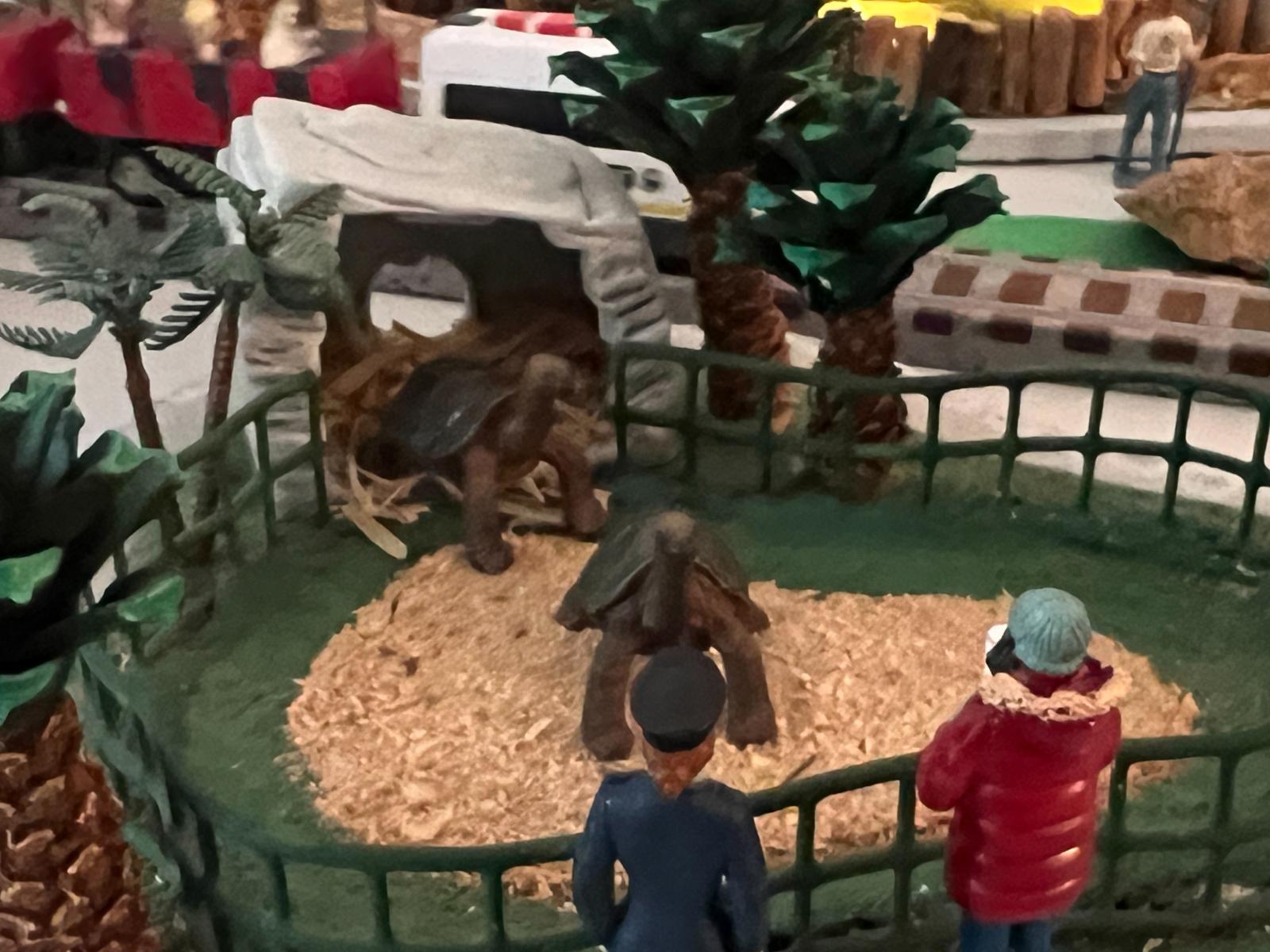
This exhibit, though small in scale, is a testament to imaginative reuse and highlights how everyday discarded items can find new life as creative components. It encapsulates a whimsical, handcrafted aesthetic, clearly designed with a playful spirit in mind.
Core Exhibit Elements:
Animal Housing: The central dwelling for the exhibit's imagined inhabitants is a discarded kid's meal Flintstone's hut. This instantly recognizable, pre-formed structure lends a charmingly anachronistic and cartoonish touch to the scene, suggesting a playful, perhaps even prehistoric, environment for its tiny occupants. Its previous life as a fast-food toy adds a layer of nostalgia and accessibility to the display.
Enclosure Fencing: Complementing the hut, the enclosure's fencing is ingeniously crafted from a recycled wire basket. The open weave of the basket provides a permeable boundary, allowing viewers to peer into the miniature world while maintaining the illusion of a contained habitat. The utilitarian origin of the basket juxtaposes nicely with the more fantastical hut, grounding the display in a sense of resourceful creativity.
Natural Elements: To bring a touch of the outdoors into this miniature diorama, pinecones (half-eaten by squirrels) are strategically placed. These natural elements introduce texture and an organic feel, while the detail of them being "half-eaten" adds a touch of authenticity and perhaps even a subtle narrative of small creatures interacting with their environment. Their presence subtly bridges the gap between the artificial components and a more naturalistic setting.
Figurines: Populating this tiny world are various plastic people and plastic animals. These mass-produced toys serve as the inhabitants of the exhibit, adding scale and allowing for countless imaginative scenarios. Their generic nature encourages viewers to project their own stories onto the scene, making the exhibit highly interactive and engaging, especially for younger audiences. The choice of plastic figurines reinforces the theme of utilizing readily available materials.
Base: The entire miniature landscape is supported by a sturdy plywood base. This fundamental component provides a stable and flat surface for the exhibit, allowing for easy display and manipulation of the individual elements. Its simple, unadorned nature ensures that the focus remains on the creative arrangement of the other components.
Decorations: Unifying and enhancing the overall aesthetic is the liberal use of acrylic paint. This versatile medium allows for the application of color, texture, and detail to various components, transforming their original appearance and bringing the entire scene to life. The paint can be used to add vibrant hues to the plastic elements, create naturalistic tones on the pinecones, or even subtly alter the appearance of the hut and fencing, tying all the disparate parts into a cohesive and visually appealing display.
Through the clever repurposing of common household items and discarded toys, this Galapagos exhibit offers a unique and charming interpretation of an ecosystem. It champions the principles of recycling and creative problem-solving, turning what might otherwise be waste into an engaging and educational display
Flamingo Exhibit
mixed
A Vibrant Coastal Habitat
Materials for Construction and Decoration:
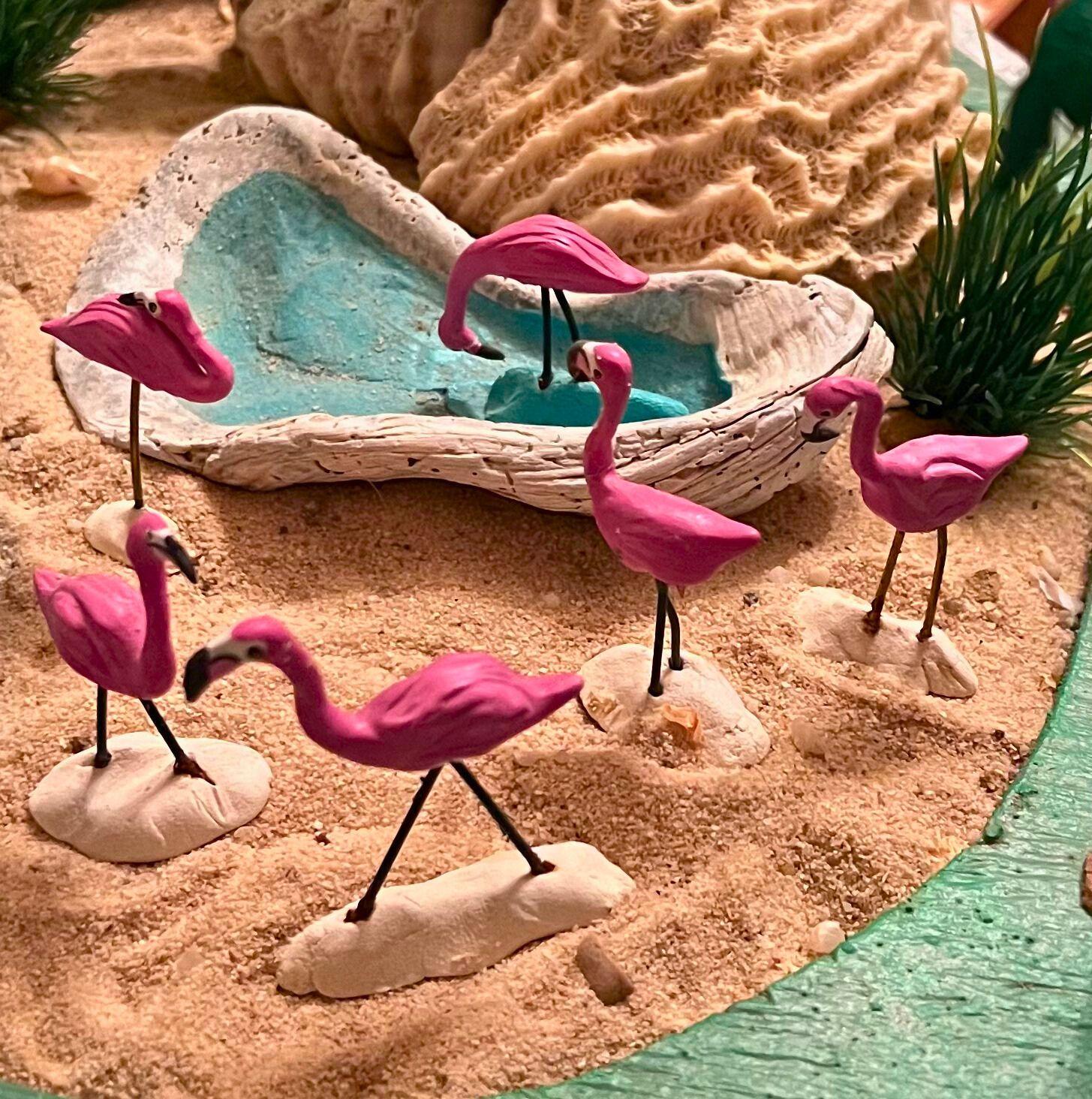
The flamingo exhibit will meticulously recreate a vibrant coastal habitat, utilizing a diverse range of materials to ensure both aesthetic appeal and environmental authenticity. The primary components include:
Natural Elements:
Seashells: Collected seashells of various sizes and types will be strategically placed to mimic the natural debris found on a coastline, providing textural interest and a realistic touch.
Sea Coral: Responsibly sourced or ethically simulated sea coral will be incorporated to represent the underwater structures found in flamingo feeding grounds, adding color and intricate natural forms.
Sand: A generous base of fine, clean sand will form the exhibit's ground cover, essential for replicating the sandy shores and shallow waters where flamingos typically forage.
Artistic and Sculptural Elements:
Fimo Clay Sculptures: Custom-crafted Fimo clay sculptures will add artistic flair and unique details to the exhibit. These could include miniature representations of coastal flora, small marine life, or even stylized interpretations of the flamingos themselves, adding an imaginative dimension.
Structural and Found Materials:
Plywood: Durable plywood will serve as the foundational material for constructing various structural elements within the exhibit, such as elevated platforms, nesting areas, or background panels, ensuring stability and versatility in design.
Discarded Aquarium Grass: Repurposed discarded aquarium grass will be ingeniously integrated to simulate aquatic vegetation and marshy areas, lending a lush, natural appearance and demonstrating a commitment to sustainability.
Acrylic Paint: A palette of vibrant acrylic paints will be used to bring color and depth to the exhibit. These paints will be applied to plywood backdrops, sculpted elements, and other surfaces to create realistic water effects, sky murals, and textural details that enhance the overall immersive experience of a flamingo habitat.
Orangutan Exhibit
mixed
A Detailed Look at Materials and Design
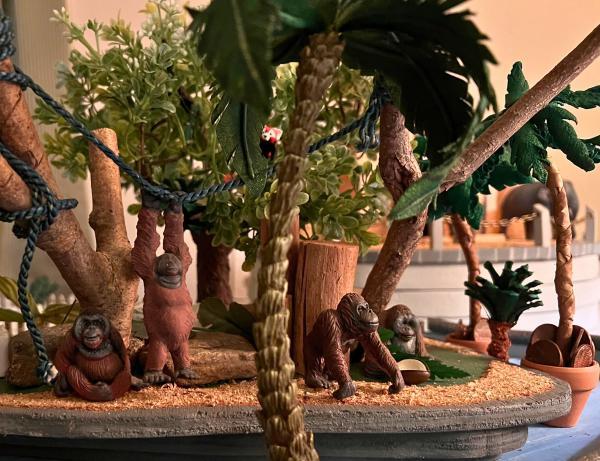
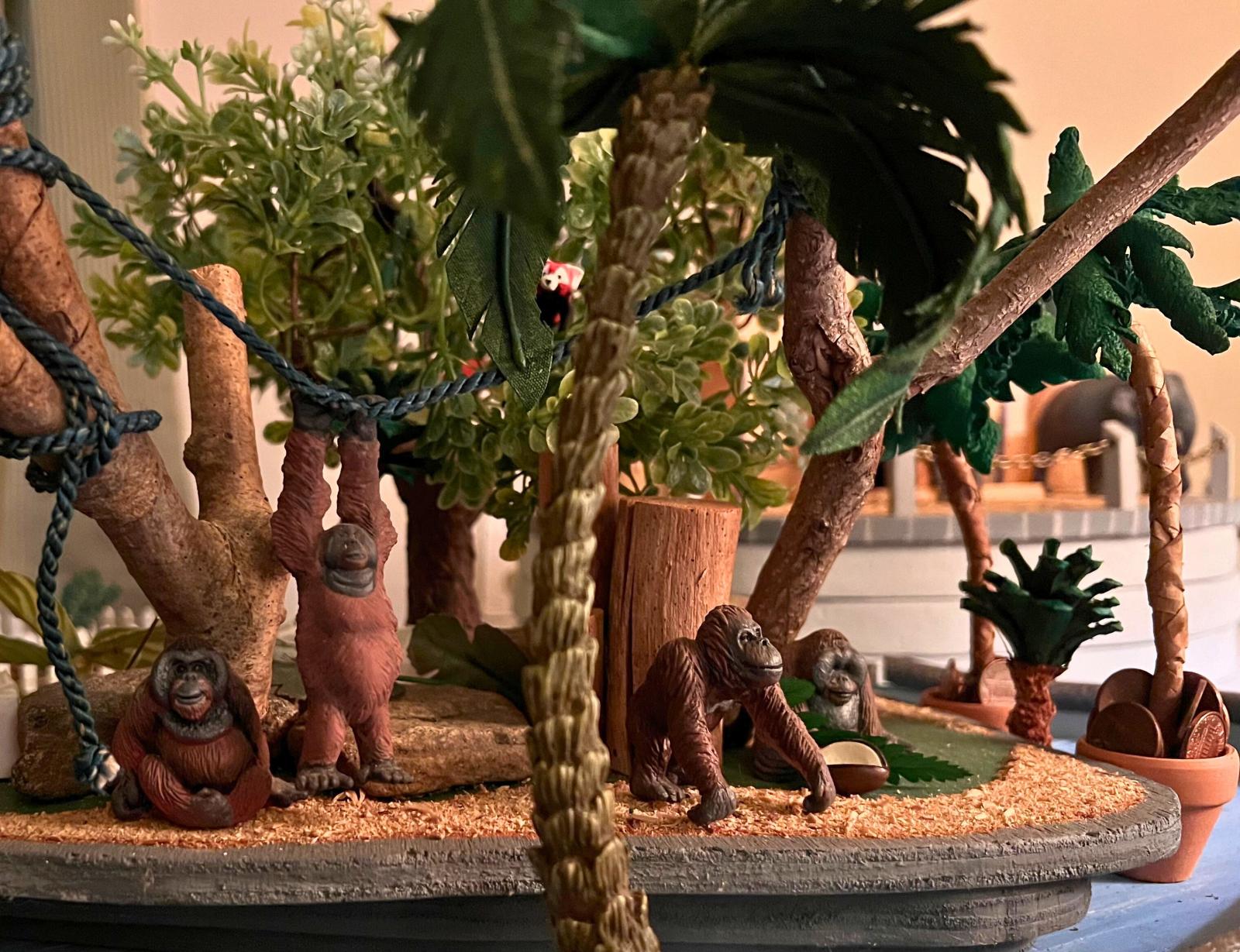
Creating an engaging and educational orangutan exhibit requires a thoughtful selection of materials that mimic their natural habitat while also incorporating elements for artistic representation and sustainability. Below is an expanded breakdown of the materials used in such a display, categorized for clarity. Natural and Organic Elements for Authenticity
These materials form the foundational layer of the exhibit, aiming to replicate the textures, colors, and overall feel of an orangutan's rainforest home.
Pine Cones: Beyond their visual appeal, pine cones introduce a tactile element, adding varied textures to the exhibit floor or climbing structures. Their natural scent can also subtly enhance the immersive experience.
Dried Orange Peels: These not only contribute a natural, earthy color but also evoke the rich biodiversity of fruit-bearing trees found in orangutan habitats. They can be scattered or incorporated into decorative elements.
Palm Trees (Miniature/Artificial for Exhibit Display): Palm trees are quintessential to rainforest ecosystems. Using miniature or high-quality artificial palm trees allows for a scaled representation within the exhibit space, providing vertical interest and a sense of canopy.
Cork: Cork, with its irregular shapes and rough texture, is excellent for simulating tree bark or rocky outcrops. It can be used as a base for climbing structures or as decorative accents on walls or platforms.
Branches: Various sizes and shapes of natural branches are crucial for mimicking the arboreal environment where orangutans spend most of their lives. These can be secured to create climbing opportunities and perching spots for exhibit figures.
Sawdust: As a soft, natural ground cover, sawdust provides a realistic forest floor texture and can be used to fill in gaps around other larger elements, creating a cohesive base for the exhibit.
Plywood: Serving as a versatile structural material, plywood can be used to construct platforms, backdrops, or the framework for larger display elements, offering a sturdy and adaptable foundation for the exhibit design.
Art and Craft Supplies for Creative Expression
These materials allow for artistic interpretation, adding color, detail, and a handcrafted touch to the exhibit.
Acrylic Paint: A highly versatile medium, acrylic paint can be used to bring vibrant life to the exhibit. It can color plywood backdrops to depict lush jungle scenes, add realistic tones to crafted elements, or even highlight specific features of the exhibit. Its quick-drying and durable nature makes it ideal for exhibit work.
Packing Paper: This readily available material can be crumpled and shaped to create varied terrain, rock formations, or even the illusion of dense foliage. It's an excellent base for papier-mâché techniques when combined with paint and adhesive, allowing for the creation of lightweight yet impactful structural elements.
Recycled and Reused Materials for Sustainability and Innovation
Incorporating recycled elements not only promotes environmental awareness but also adds a unique, resource-conscious dimension to the exhibit design.
Plastic Animals (Toy Figures): Repurposing plastic animal toys, particularly those resembling orangutans or other rainforest creatures, adds a playful and educational element to the exhibit. These figures can be strategically placed within the recreated habitat to illustrate animal behavior or ecological interactions.
Cord from a Recycled Gift Bag: This seemingly simple item can be incredibly useful. It can be transformed into vines, lianas, or used to secure elements within the exhibit, adding intricate details that enhance the sense of a dense jungle environment. Its varying colors and textures can also add visual interest.
Recycled Plastic Greenery: Rather than purchasing new, using recycled plastic plants or elements from old floral arrangements provides a sustainable way to introduce additional layers of foliage and greenery, contributing to the overall lushness of the exhibit while minimizing waste.
By thoughtfully combining these diverse materials, an orangutan exhibit can be created that is not only visually stunning and informative but also mindful of environmental impact through the integration of natural and recycled components.
Asian Elephant Exhibit
mixed
A Deep Dive into Our Materials and Creative Process
We are thrilled to unveil the detailed material list and creative approach behind our Asian Elephant exhibit! This ambitious project is coming to life through a fascinating blend of recycled, found, and traditional artistic materials, all meticulously selected to create a compelling and authentic experience for our visitors.
Recycled and Found Objects: Breathing New Life into Discarded Treasures
A core philosophy of this exhibit is sustainability and imaginative repurposing. We believe that discarded items hold immense potential for artistic expression and storytelling. For our recycled and found objects, we have amassed a diverse collection, each piece contributing a unique texture, history, or symbolic meaning:
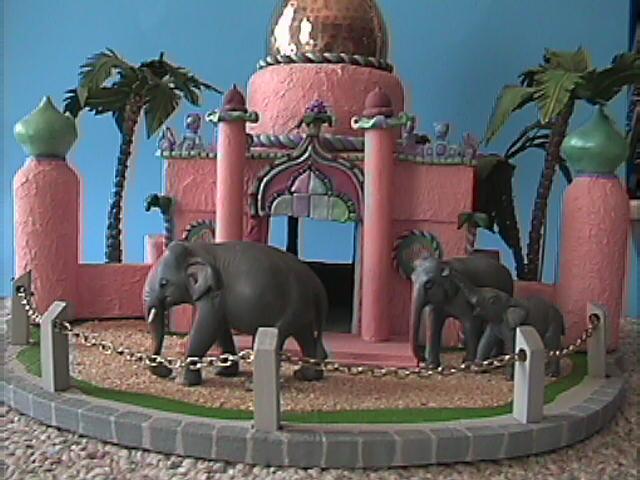
Old Chains from Discarded Jewelry: These chains, once part of treasured adornments, will be artfully integrated to symbolize the strength and interconnectedness of elephant herds, perhaps even subtly hinting at the historical use of chains in elephant training (a sensitive topic we aim to approach with educational nuance). Their metallic sheen and intricate links will add visual interest and a touch of unexpected elegance.
The Top of a Goblet: This elegant and somewhat archaic object will be recontextualized within the exhibit, possibly serving as a decorative element within a miniature diorama representing a watering hole or a cultural artifact that might be found in a region where Asian elephants roam. Its form evokes a sense of history and perhaps even celebration.
Some Matchboxes: These humble, everyday items will be transformed through scale and arrangement. They could be used to create architectural details within a miniature village scene or stacked to form interesting geometric patterns, adding a surprising element of domesticity to the wild landscape.
Eyewash Containers (Who Knew?): The translucent or opaque nature of these containers offers intriguing possibilities. They might be cut and reformed to create shimmering water features, or perhaps even used to represent specific botanical elements within the exhibit's flora. Their industrial origin will create an interesting contrast with the organic forms of the elephants and their habitat.
Acorns: These natural treasures, harvested from local oak trees, will bring an authentic touch of nature into the exhibit. They can be used as ground cover, integrated into miniature trees, or even modified to represent food sources for the elephants, emphasizing their natural diet and environment.
An Antique Store Elephant: This existing representation of an elephant, with its own history and patina, will serve as a poignant focal point. It can symbolize the enduring human fascination with these majestic creatures and will be carefully integrated to harmonize with the overall aesthetic, perhaps even serving as a "spirit" or "ancestor" elephant within the narrative.
And Even a Plastic Elephant!: This seemingly incongruous item highlights our playful approach to materials and the potential for transforming even the most common objects. The plastic elephant might be customized with paint or texture to blend seamlessly into the exhibit, or conversely, it could be deliberately left as a subtle reminder of the modern world's impact on nature, prompting reflection.
Building and Sculpting: Crafting the Habitat and Its Inhabitants
Beyond the found objects, a robust set of traditional building and sculpting materials are being employed to construct the exhibit's various elements, from the landscape to the detailed sculptures:
Plywood: Serving as the fundamental structural backbone, plywood will be used to create the exhibit's base, elevated platforms, and any large-scale architectural elements like miniature buildings or rock formations. Its versatility allows for strong, stable constructions that can be easily shaped and painted.
Wood: Complementing the plywood, various types of wood will be utilized for more intricate structural details, fencing, miniature trees, or carved elements, adding organic textures and a sense of natural warmth to the exhibit.
Acrylic Paint: A vibrant and versatile medium, acrylic paint will be extensively used to bring color and life to every surface. From realistic portrayals of elephant skin and lush vegetation to the subtle hues of distant landscapes and architectural details, acrylics offer excellent coverage, durability, and a wide spectrum of tones.
Fimo Clay for Sculptures: This polymer clay is ideal for creating detailed and durable miniature sculptures of the Asian elephants themselves, as well as other animals, human figures, or small environmental features. Its pliability allows for intricate detailing, and once baked, it becomes a permanent and sturdy addition to the exhibit.
Papier-Mâché and Toilet Paper for Some Neat Building Texture: This resourceful combination will be employed to create realistic and engaging textures for various surfaces. Whether it's the rough bark of trees, the craggy surfaces of rocks, or the weathered walls of miniature structures, the layering and shaping of papier-mâché and toilet paper will add depth and visual authenticity.
Sawdust: This natural byproduct will be utilized for ground cover, pathways, or to create realistic soil and dirt textures within the exhibit, grounding the scene and adding an earthy, natural element.
And a Solid Plywood Base to Hold It All Together: The ultimate foundation for our exhibit, this sturdy plywood base ensures the stability and longevity of the entire display, providing a secure platform for all the diverse materials and intricate details that will bring the Asian Elephant exhibit to life.
Through this thoughtful combination of recycled materials and traditional crafting techniques, our Asian Elephant exhibit aims to be not only educational but also a testament to creativity, sustainability, and the boundless possibilities of artistic expression. We believe this unique approach will captivate visitors and foster a deeper appreciation for these magnificent creatures and their vital habitats.
Sealion Exhibit
mixed
Key Components and Materials:
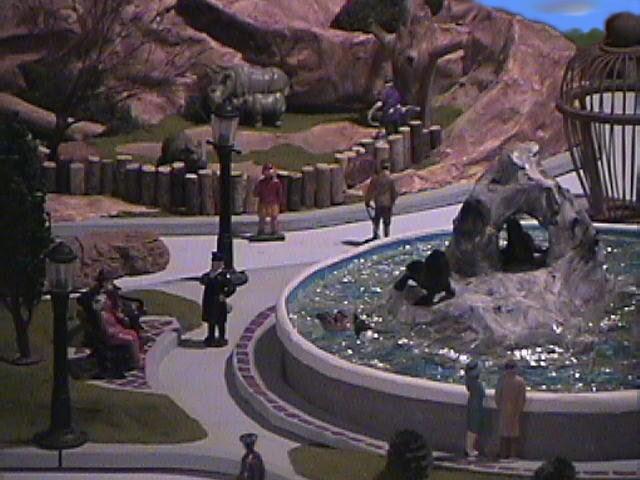
Rock Formations: The rugged and textured rock formations, crucial for providing the sea lions with a natural-looking habitat, were expertly fashioned from paper mache. This material allowed for the creation of organic, varying shapes and a lightweight structure.
Water Feature: The illusion of shimmering, deep water was achieved through the careful application of epoxy. This resin provides a glossy, transparent, and durable finish, perfectly mimicking the look of an active sea lion pool.
Natural Elements: To bring a sense of organic authenticity to the exhibit, a variety of natural elements were incorporated.
These included:
Pine Bark: Utilized to add texture and depth to the landscape, simulating rocky outcrops or ground cover.
Cut Sticks and Branches: Strategically placed to represent driftwood, fallen logs, or perches, enhancing the natural appeal of the environment.
Sumac Tree Buds: Ingeniously repurposed to serve as miniature trees, lending a touch of botanical detail and scale to the exhibit.
Figurines: A diverse collection of figurines populates the exhibit, adding life and narrative:
Plastic Animals: Representing the star inhabitants, the sea lions themselves, as well as other potential marine or coastal wildlife.
Die-Cast Antique Lead Figurines: These add a unique historical or whimsical touch, potentially depicting human visitors or other elements of interest.
Plastic Figurines: Further diversifying the inhabitants and elements within the diorama.
Base Structure: The entire exhibit is robustly supported by a multi-part base:
Recycled Plastic Container: This likely forms the core of the water feature or a central structural element, demonstrating an eco-conscious approach to construction.
Plywood Base: Providing a sturdy and flat foundation upon which the entire exhibit is constructed, ensuring stability and ease of display.
Other Found Objects: The creative use of "found objects" highlights a resourceful and artistic approach to model-making. These unlisted items likely contribute unique textures, details, or structural elements that enhance the overall realism and charm of the exhibit.
This "Seal Lion Exhibit" is a testament to imaginative material usage and careful construction, resulting in a compelling and detailed representation of a marine environment.
Manatee Exhibit: A Recycled Creation
mixed
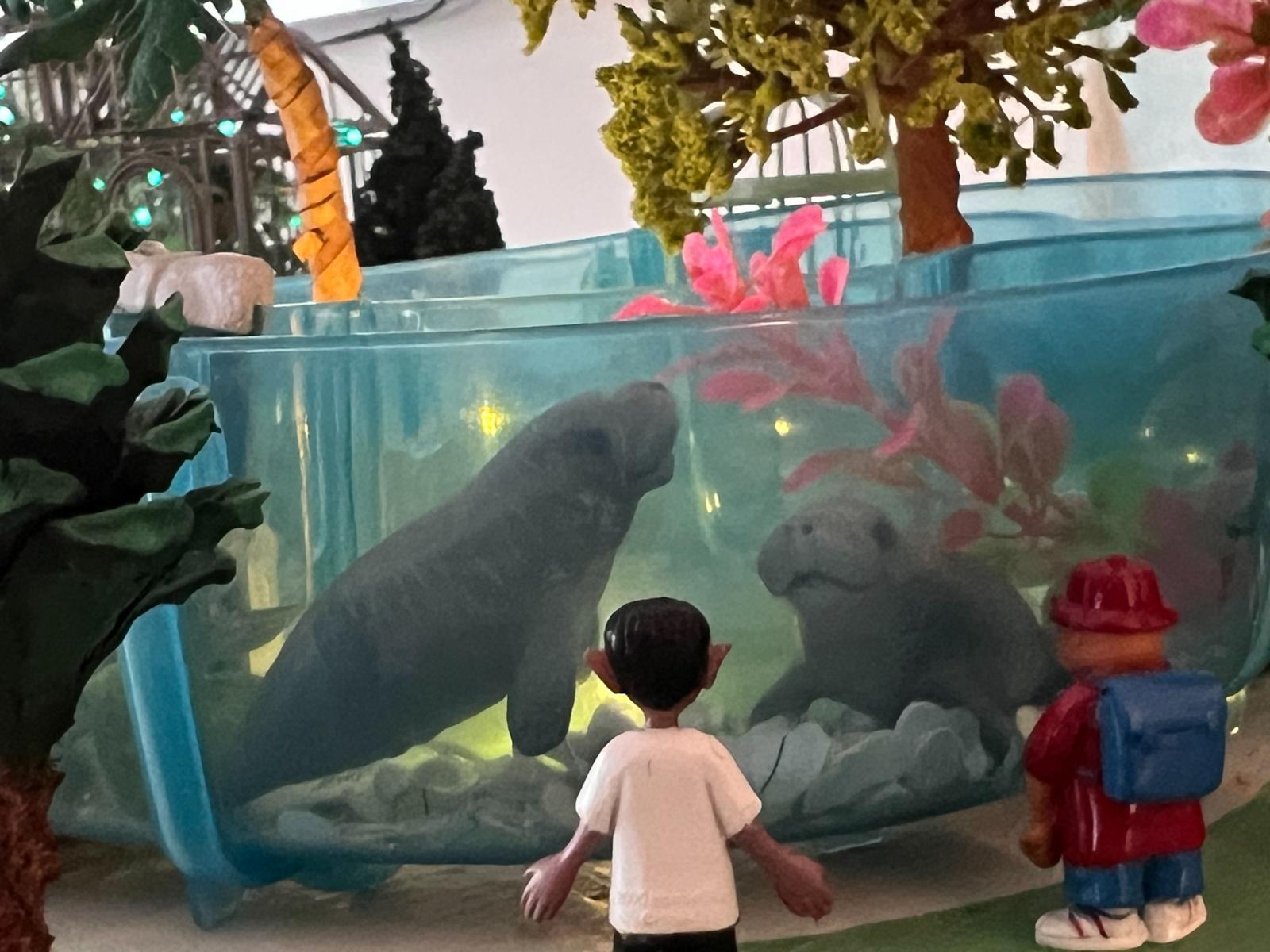
This manatee exhibit was meticulously crafted using a variety of repurposed materials, transforming discarded items into a vibrant and imaginative habitat. The base of the exhibit was formed from a discarded child's water toy. Hole punches were utilized to create texture and detail.
Flora in the exhibit includes discarded aquarium plants, complemented by discarded plastic flowers that were reshaped and given new life with spackle. The trees within the exhibit were painted with acrylics, and their trunks were fashioned from discarded packing paper. The unique fronds for the palm trees were ingeniously created from mandarin orange peels.
Further natural elements include a pine cone and sumac buds, integrated to enhance the exhibit's organic feel. Plastic animals and miniature plastic people from gumball machines populate the scene, adding scale and narrative to this environmentally conscious display.
Booking
On site with Willow Street Wellness and Neurofeedback educational and training center.
First Fridays 5-7. On request for groups as available call: 667-661-2024